

Executive Summary
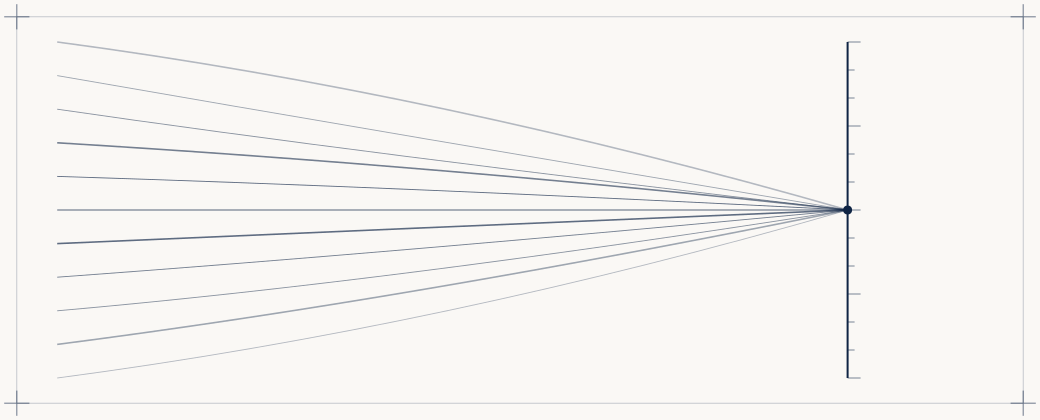
A generative answer engine has to decide what a brand is before it can decide whether to mention it. That resolution step runs on agreement across sources, which makes consistency an optimization problem rather than a branding preference.
My Perspective
For twenty years the unit of search optimization was the page. The unit is now the entity: a thing the system believes exists, with attributes it believes are true, assembled from every place that describes it.
This changes what counts as an error. A page that contradicts the company’s own description of itself is no longer a minor inconsistency in tone. It is a competing claim, and the resolution process treats it as evidence that the attribute is uncertain.
Machines do not reward novelty. They reward a brand that says the same true thing everywhere.
The practical work is dull and it is not content marketing. One description, used verbatim everywhere the organization appears. Consistent naming of people, products and locations. Structured data that states the same facts a human reader would find in the copy. Every profile, directory and author bio brought into line.
Brands that did this early are not being rewarded for cleverness. They are being resolved with confidence, and confidence is what gets cited.
Key Takeaways
- Resolution happens before ranking; an unresolved brand cannot be recommended.
- Contradiction across sources is read as uncertainty, not as variety.
- The work is consistency of naming, description and structured data, not more content.
- One description string, used verbatim everywhere, is the highest-leverage half hour available.