
The technology was never the hard part.
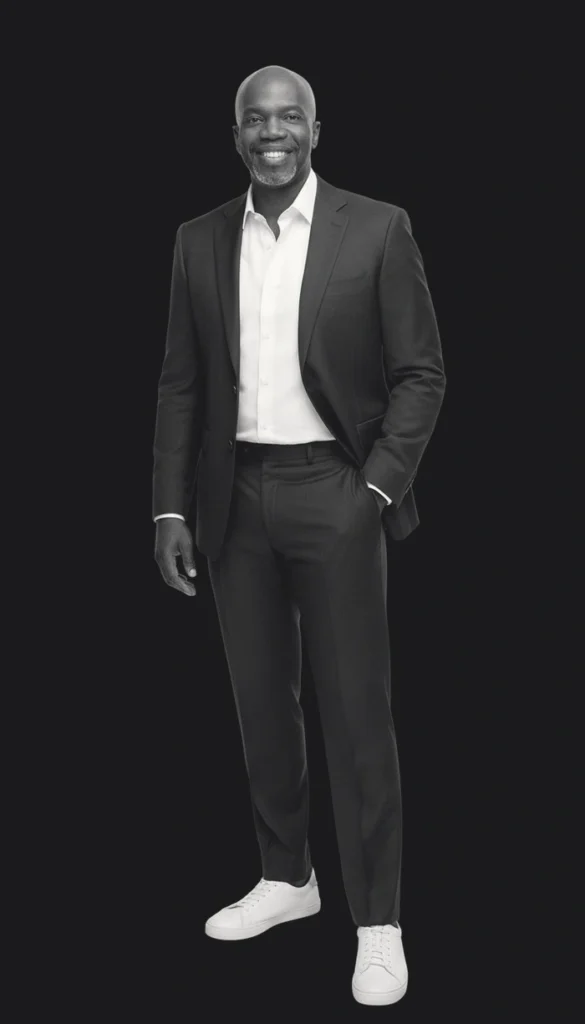
Don Dodds
Founder, M16 Marketing®
Forbes Agency Council
In the 1990s, Don Dodds sat across from business owners and explained why the Yellow Pages were about to stop working. Most did not believe him. The ones who did were early to something that reorganized their industries.
He spent the next three decades in that same position, standing between a change that had already happened and organizations that had not yet reorganized around it. He built and exited a multi-vendor commerce platform. He scaled an international platform for medical schools. He founded M16 Marketing and, across more than a thousand engagements, kept finding the same thing.
He is a technologist by training and by temperament: someone who builds the thing, puts it in front of the world, and then watches what it reveals. What it kept revealing was that the build was rarely the constraint. Companies with capable teams, good tools and abundant data still could not answer the simplest questions about their own marketing: what changed, why, and what to do next.
That is how a technologist ends up doing strategy. He could fix the build, and the questions still went unanswered, so the questions became the work.
Being early is the job
It has happened roughly every two years since 1998: something already true became visible to him before the market agreed to look at it.
None of that is prediction and none of it is a gift. The work is reading what has already happened before the market has finished debating it. The interval is the part worth noticing. Once is luck. Every few years since 1998 is a method.
The future is rarely a surprise. It is usually a thing already visible that nobody has agreed to look at yet.
Why PIEARM exists
Don Dodds introduced PIEARM in 2015 to eliminate random acts of marketing: a sequence M16 ran so that what one engagement learned survived into the next. It was not designed as a product. It was designed to stop the organization from forgetting.
Formalized, it became five connected stages: research uncovers the opportunity, strategy builds the plan, creation produces the marketing, intelligence explains the results, optimization improves what happens next. The sequence is not the point. What matters is that each stage inherits from the one before it and hands evidence back to the one after.
Today that sequence is the architecture underneath his proprietary Marketing Operating System. PIEARM is how the operating system is built; the operating system is what it produces.
Better marketing does not begin with better tactics. It begins with better decisions.
Why AI needs the rules written down first
The arrival of generative systems did not change that. It made it urgent. AI is exceptionally good at producing more of whatever it is given. An organization without a governing definition of itself now scales its inconsistency at machine speed, and calls the result productivity.
Governance is not a brake on AI. It is the precondition for using it seriously.
Writing for the Forbes Agency Council
He has been publishing there since 2020. The subjects have moved in one direction: technical search mechanics, then entity optimization, then machine discovery, then marketing operating systems. The early columns answered how to rank. The recent ones answer how to decide.
What comes next
The next decade of marketing will be defined by organizations that can explain their own decisions: to their boards, to their teams, and increasingly to the machines that summarize them. That is what the work here is for: the practice, the research, and now the Marketing Decision Delta, an annual attempt to measure decision quality in public, so the claim rests on evidence rather than anecdote.